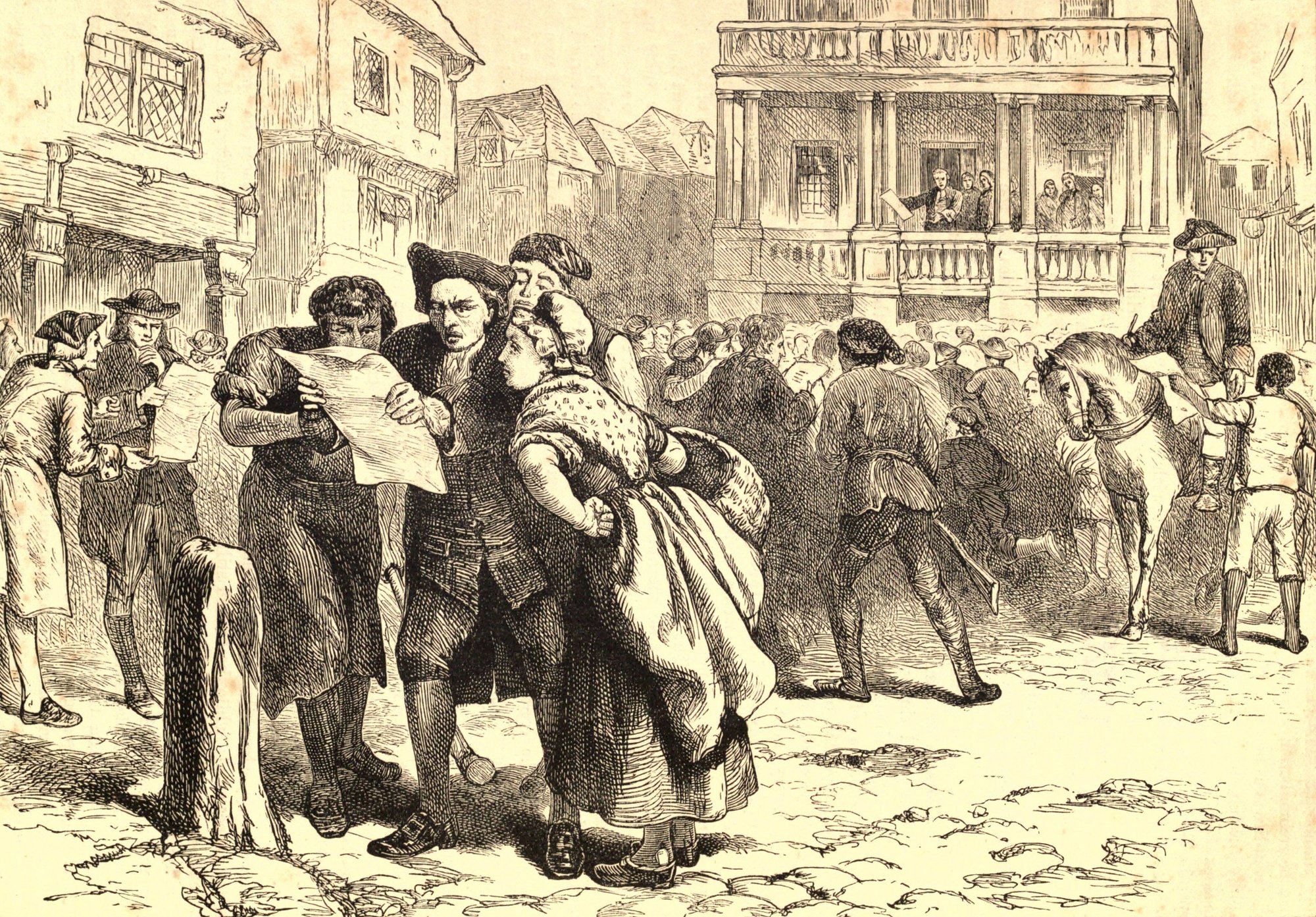
Bostonians reading the Stamp Act in 1765

The Tax Was Small. The Principle Was Huge.

In 1765, Britain’s Stamp Act taxed documents, newspapers, pamphlets, and even playing cards. Colonists were not mainly furious about the price; they had no representatives in Parliament.

American Revolution: Why a Small Tax Sparked a Revolt
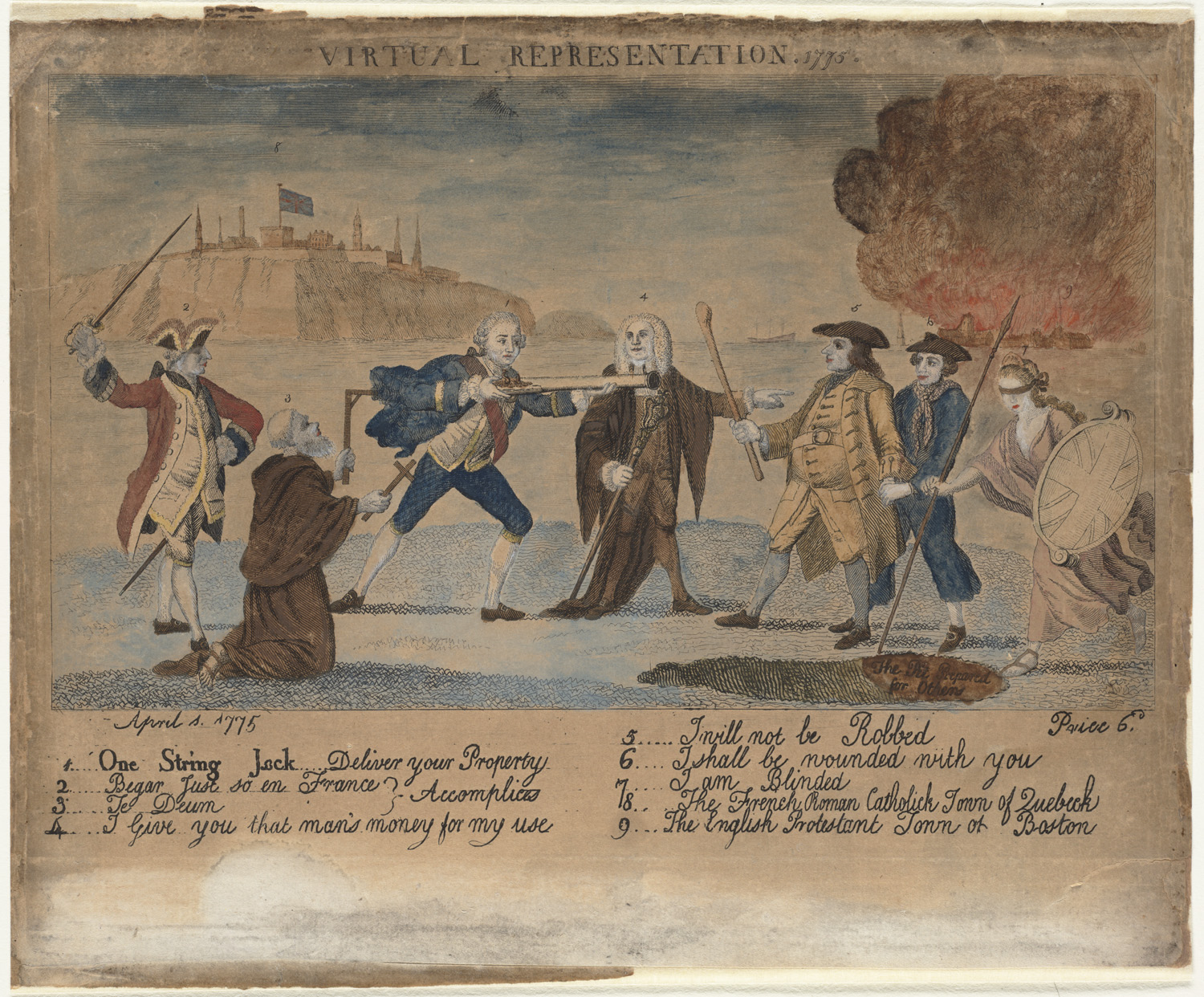
File name: 11_03_000001 Box label: American related cartoons, 5284 - 5476 Title: Virtual representation, 1775 Translated title: Creator/Contributor: Date issued: 1775-04-01 Physical description: 1 print : engraving, color ; 10 x 12 in. Summary: Bute aims a blunderbuss at an American gentleman with a club while Britannia falls into "the Pit Prepared for Others." In the background, Roman Catholic Quebec sits serenely on the hill while "the English Protestant Town of Boston" is in flames. Genre: Political cartoons; Engravings Subjects: Bute, John Stuart, Earl of, 1713-1792; Britannia (Symbolic character); United States--History--Revolution, 1775-1783; Politics & government; Punishment & torture; Firearms Notes: References: Catalogue of prints and drawings in the British Museum, no. 5286 (BM 5286); References: American Revolution in Drawings and Prints, no. 683 (ARDP 683) Statement of responsibility: Collection: Americana Collection Location: Boston Public Library, Print Department Rights: No known restrictions

“Virtual” Representation Wasn’t Enough

Parliament claimed virtual representation because most people in Britain could not vote either. Colonists replied that no British lawmaker answered to an American colonial community.

American Revolution: Why a Small Tax Sparked a Revolt

American Revolution: Why a Small Tax Sparked a Revolt | DeepSwipe