Full article · 7 min read
Biology: Why Water Makes Life Possible
Water seems ordinary, but in biology it is anything but simple. It is the most abundant molecule in every organism, and life depends on its unusual properties at nearly every level, from chemistry inside a cell to the survival of entire ecosystems. What makes water so special is not just that living things contain a lot of it, but that its structure gives it a set of behaviors that make life possible.
Water is everywhere in living things
Life on Earth is believed to have arisen from the Earth's first ocean, which formed about 3.8 billion years ago. Since then, water has remained central to biology. Inside organisms, water is the medium in which many of the chemical reactions of life occur. Cells rely on it, tissues are filled with it, and biological molecules constantly interact within watery environments.
That matters because biology is full of chemical processes. Cells need to move materials around, break molecules apart, build new ones, and power metabolism. Water helps make all of this possible because it is an effective solvent.
A solvent is a substance that dissolves other substances, called solutes. In living systems, this means water can dissolve things such as sodium ions, chloride ions, and other small molecules. Once dissolved, these substances are more likely to come into contact with each other, making the chemical reactions of life easier to carry out.
The secret is water’s polar structure
The reason water is such a powerful helper in biology begins with its molecular structure. A water molecule is small and bent in shape, made of two hydrogen atoms bonded to one oxygen atom, or H2O. But those bonds are not electrically balanced.
Water is a polar molecule. That means one part of the molecule carries a slight negative charge and another part carries a slight positive charge. In water, the oxygen atom has a slight negative charge, while the hydrogen atoms have slight positive charges.
This uneven charge is crucial. It allows water molecules to attract each other through hydrogen bonds. These are attractions between the slightly positive region of one water molecule and the slightly negative region of another. Hydrogen bonds are not the same as the covalent bonds that hold the atoms inside a water molecule together, but they are strong enough to give water remarkable properties.
Because of hydrogen bonding, water is cohesive, meaning water molecules tend to stick to one another. This cohesion creates surface tension, the effect produced by the attraction between molecules at the surface of the liquid.
Water is also adhesive, meaning it can stick to other polar or charged non-water substances. In biological settings, that ability helps water interact with many different molecules rather than staying chemically isolated.
Why water is so good at supporting reactions
Biology depends on reactions happening in the right place and at the right time. Water helps by acting as the environment where dissolved substances can meet. If sodium, chloride, and other small molecules are dispersed through an aqueous solution, they can interact much more readily than if they remained locked in solid form.
An aqueous solution is simply a solution in which water is the dissolving medium. Since cells are enclosed spaces packed with biomolecules, having water as the main molecular background gives them a flexible and reactive internal environment.
Within the cytoplasm of a cell, many biomolecules such as proteins and nucleic acids are present. Water helps create the conditions under which these molecules can participate in the chemical events that sustain life. Without an abundant solvent, metabolism would be far less efficient.
Why ice floats instead of sinking
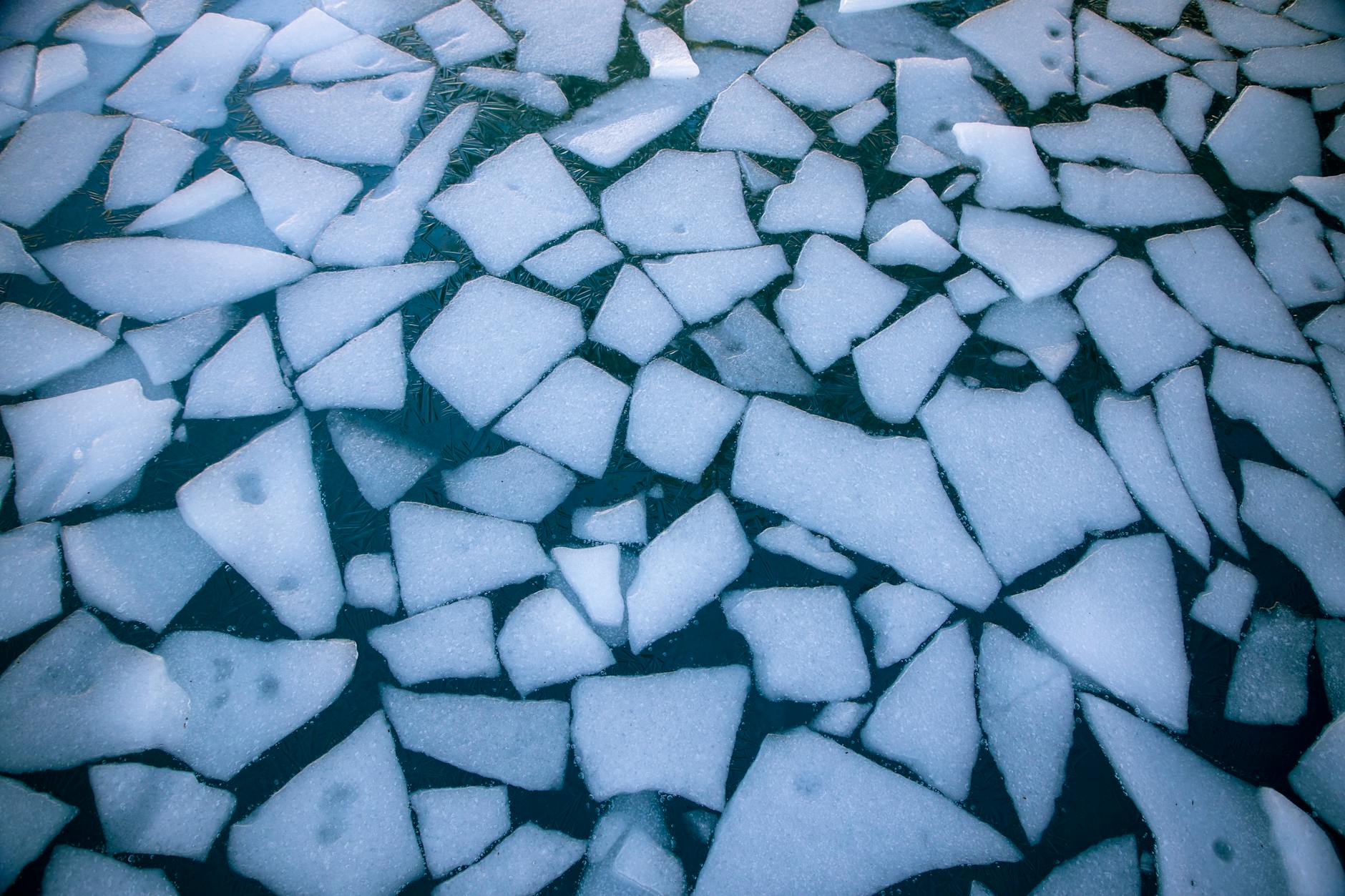
One of water’s strangest and most important traits is that it is denser as a liquid than as a solid. Most substances become denser when they freeze, but water does the opposite. That means ice floats on liquid water.
This oddity has huge biological consequences. In ponds, lakes, and oceans, floating ice forms a layer above the liquid water below. That layer helps insulate the water underneath from the cold air above.
Insulation means slowing the transfer of heat. So when the surface freezes, the deeper liquid water is protected to some extent from further rapid cooling. This matters for life in aquatic environments because it allows liquid water to remain below the ice. If ice sank instead, bodies of water would freeze in a very different way, making aquatic life much harder to sustain.
The floating of ice is one of those physical details that seems minor until you realize entire ecosystems can depend on it.
Water as a hidden thermal shield
Another life-supporting property of water is its high specific heat capacity. This means water can absorb a large amount of energy before its temperature changes very much.
Why does that happen? A lot of energy is needed to break the hydrogen bonds between water molecules. As a result, water resists sudden heating and sudden cooling.
This gives living things and environments a kind of thermal buffering. Rapid temperature swings are less severe when water is present in large amounts. Since organisms are mostly water and many habitats contain a great deal of water, this property helps stabilize conditions for life.
In simple terms, water acts like a thermal shield. It soaks up energy without changing temperature too quickly, and that helps protect biological systems from abrupt extremes.
Water is constantly changing at the molecular level
Even pure water is not chemically idle. Each water molecule continuously dissociates into hydrogen ions and hydroxyl ions before reforming into water again.
Dissociation means a molecule separates into smaller charged parts. In this case, the products are hydrogen ions and hydroxyl ions. But this is not a one-way process. Water molecules are continually breaking apart and reforming.
In pure water, the number of hydrogen ions equals the number of hydroxyl ions. Because these two are balanced, pure water has a neutral pH.
pH is a measure related to the balance of hydrogen ions in a solution. A neutral pH means the solution is neither acidic nor basic. This balance is another example of how water is dynamic rather than passive. Even when it looks still, at the molecular scale it is busy.
Water inside cells
Cells are the fundamental units of life, and water is essential to their functioning. Every cell is enclosed by a cell membrane that separates the cytoplasm from the extracellular space. Within that cytoplasm are biomolecules, organelles in eukaryotic cells, and constant chemical activity.
All cells require energy to sustain cellular processes, and metabolism is the set of chemical reactions that keep them alive. Those reactions include breaking down compounds, building new molecules, eliminating wastes, maintaining structures, and responding to the environment. Water supports this by serving as the medium in which many substances are dissolved and reactions can proceed.
Cellular respiration, for example, is a set of metabolic reactions that converts chemical energy from nutrients into ATP, the molecule that powers cellular processes. Photosynthesis stores chemical energy in carbohydrate molecules synthesized from carbon dioxide and water. In both cases, water is tied directly to the chemistry of life.
From molecules to ecosystems
Water’s importance does not stop at the cellular level. Ecosystems include both living components and nonliving components such as water, light, temperature, humidity, atmosphere, acidity, and soil. Water is one of the core abiotic factors shaping how ecosystems function.
Energy from the sun enters ecosystems through photosynthesis and becomes incorporated into plant tissue. Matter and energy then move through food webs as organisms consume plants and one another. Water is part of the environment in which these exchanges happen, and it also participates in the broader water cycle of the biosphere.
In the global ecosystem, matter moves through biotic and abiotic compartments in biogeochemical cycles. One of these is the water cycle, which links the biosphere, atmosphere, hydrosphere, and lithosphere.
Why water matters so much in biology
Biology is the study of life, and water is woven into nearly every biological process. Its polar structure allows it to dissolve many substances. Its hydrogen bonding gives it cohesion, adhesion, and surface tension. Its unusual density makes ice float and insulate water below. Its high specific heat capacity helps reduce rapid temperature changes. Its continual dissociation into hydrogen and hydroxyl ions gives pure water a neutral pH when those ions are balanced.
Taken together, these traits make water far more than just a background substance. It is an active participant in the chemistry, stability, and persistence of life.
That is why one of the most familiar molecules on Earth is also one of the strangest—and one of the most important.
Sources
Based on information from Biology.
More like this
Dive deeper into life’s weirdest essentials — download DeepSwipe and let your curiosity flow.