![Identifier: historyofjuliusc03abbo (find matches) Title: History of Julius Caesar Year: 1849 (1840s) Authors: Abbott, Jacob, 1803-1879 Subjects: Caesar, Julius Publisher: New York, Harper & brothers Contributing Library: The Library of Congress Digitizing Sponsor: The Library of Congress View Book Page: Book Viewer About This Book: Catalog Entry View All Images: All Images From Book Click here to view book online to see this illustration in context in a browseable online version of this book. Text Appearing Before Image: 138 JULIUS CÆSAR. [B.C. 50.———————————————————————————————————.mw-parser-output .columns-start{width:100%}.mw-parser-output .columns-start div.column{float:left}.mw-parser-output .columns-2 div.column{width:calc(100%/2);min-width:30em}.mw-parser-output .columns-3 div.column{width:calc(100%/3);min-width:20em}.mw-parser-output .columns-4 div.column{width:calc(100%/4);min-width:20em}.mw-parser-output .columns-5 div.column{width:calc(100%/5);min-width:20em}.mw-parser-output .columns-6 div.column{width:calc(100%/6);min-width:20em}@media(max-width:720px){.mw-parser-output .columns-start div.column{width:100%;min-width:0;float:none}}Caesar's midnight march.He loses his way.———————————————————————————————————served at Rome. Accordingly, on the very eveof his departure, he busied himself with his fenc-ing school, and assumed with his officers andsoldiers a careless and unconcerned air, whichprevented any one from suspecting his design.In the course of the day he privately sentforward some cohorts to the southward, withorders for them to encamp on the banks of theRubicon. When night came he sat down tosupper as usual, and conversed with his friendsin his ordinary manner, and went with themafterward to a public entertainment. As soonas it was dark and the streets were still, heset off secretly from the city, accompanied by avery few attendants. Instead of making useof his ordinary equipage, the parading of whichwould have attracted attention to his move-ments, he had some mules taken from a neigh-boring bake-house, and harnessed into his chaise.There were torch-bearers provided to light theway. The cavalcade drove on during the night,finding, however, the hasty preparations whichhad been made inadequate for the occasion.The torches went out, the guides lost theirway, and the future conqueror of the worldwandered about bewildered and lost, until, justafter break of day, the party met with a peas- Text Appearing After Image: CROSSING THE RUBICONB.C. 50.] CROSSING THE RUBICON. 141——————————————————————————————————————Cæsar at the Rubicon.His hesitation at the river.——————————————————————————————————————ant who undertook to guide them. Under hisdirection they made their way to the mainroad again, and advanced then without furtherdifficulty to the banks of the river, where theyfound that portion of the army which had beensent forward encamped, and awaiting their ar-rival. Cæsar stood for some time upon the banksof the stream, musing upon the greatness ofthe undertaking in which simply passing acrossit would involve him. His officers stood by hisside. " We can retreat now " said he, " butonce across that river and we must go on." Hepaused for some time, conscious of the vast importance of the decision, though he thoughtonly, doubtless, of its consequences to himself.Taking the step which was now before himwould necessarily end either in his realizing theloftiest aspirations of his ambition, or in his ut-ter and irreparable ruin. There were vast pub-lic interests, too, at stake, of which, however,he probably thought but little. It proved, inthe end, that the history of the whole Romanworld, for several centuries, was depending uponthe manner in which the question now in Cæ-sar's mind should turn.There was a. little bridge across the Rubicon Note About Images Please note that these images are extracted from scanned page images that may have been digitally enhanced for readability - coloration and appearance of these illustrations may not perfectly resemble the original work.](https://cdn.deepswipe.app/images/0.2.0/84436f04a90593c9cd221b90828143f902480f1f14aebc2a580a8b6e9fe5b3be.jpg)
One river changed Roman history
In 49 BC, Julius Caesar crossed the Rubicon River and marched into Italy with his army. He did it to avoid trial, poverty, and exile after his enemies tried to strip him of his legions.Ancient Rome: Caesar, the Rubicon, and the End of the Republic
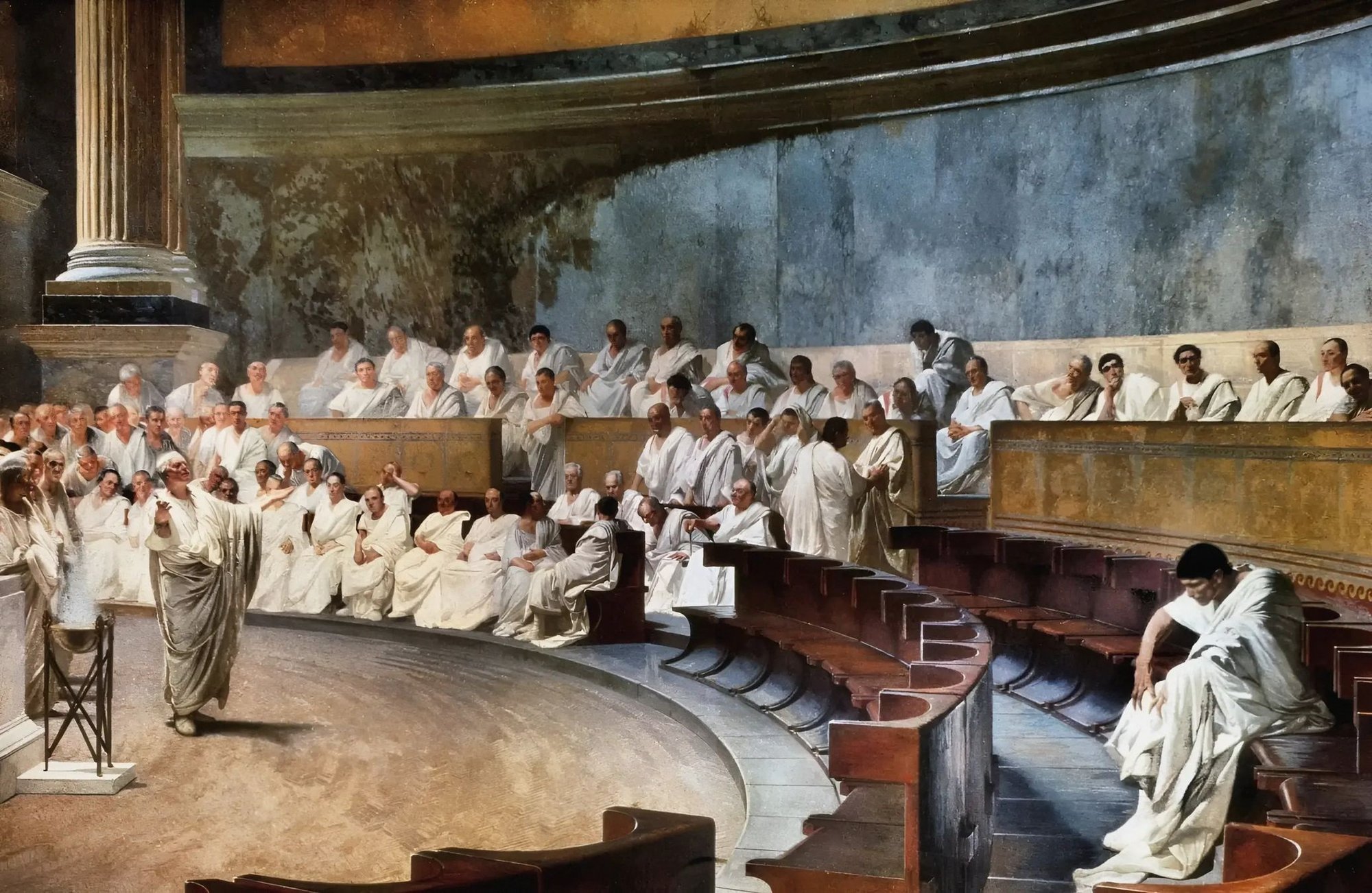
After that, there was no easy return
Caesar defeated Pompey's side, won brilliantly at Pharsalus, and crushed the optimates. In just a few years, he became the most powerful man in Rome.Ancient Rome: Caesar, the Rubicon, and the End of the Republic
