Full article · 7 min read
Ancient Egyptian Deities: Why Egypt Had So Many Gods
Ancient Egypt did not revolve around just a few divine figures. Egyptian texts name more than 1,400 deities, and some estimates go even further, describing “thousands upon thousands.” That huge number hints at something important: Egyptian religion was not a tidy, one-size-fits-all system. Deities had their own cults, roles, myths, and local importance, and many existed side by side.
A cult in this context does not mean anything sinister or fringe. It simply refers to the community, rituals, and practices devoted to a particular deity. In ancient Egypt, these cults helped organize worship and gave specific gods strong ties to places, temples, and everyday concerns.
This rich divine world made Egyptian religion feel crowded, but not chaotic. Different gods could govern different parts of life, nature, kingship, death, and the unseen world. Some were highly prominent in temples and royal texts, while others appear only briefly in inscriptions, their exact nature still uncertain.
More than names on a list
Although many Egyptian deities are named in surviving records, not all are equally well understood. Some texts preserve only a name or a vague reference. Even so, around 200 deities stand out clearly in the Pyramid Texts and in ancient temples.
Among the better-known figures are Min, Neith, Anubis, Atum, Bes, Horus, Isis, Ra, Meretseger, Nut, Osiris, Shu, Sia, and Thoth. What makes this pantheon especially fascinating is that these deities were not limited to one narrow specialty. Major gods often had multiple roles and connections to several different phenomena.
That flexibility helps explain how Egyptian religion could support so many divine beings without reducing them to a simple checklist. A god might be linked to nature, ritual, society, kingship, and the afterlife all at once.
Forces made personal
One of the most striking features of Egyptian religion is how often deities represented natural phenomena, physical things, or social realities as hidden powers working within them.
This idea is captured by the term immanent. If a force is immanent, it is understood as being present within the world rather than existing completely outside it. Egyptian deities were often imagined this way: not merely distant rulers of reality, but powers active inside air, earth, perception, fertility, and other aspects of existence.
A few examples make this clearer:
- Shu represented air.
- Meretseger represented parts of the earth.
- Sia represented the abstract power of perception.
Perception here means the power of awareness or understanding through the senses and the mind. By treating even something as intangible as perception as divine, Egyptian religion showed how broad its idea of sacred power could be.
This way of thinking made the world feel alive with meaning. Air was not just air. Earth was not just ground. Perception was not merely a mental process. Each could be tied to a divine presence.
Animal forms, human forms, and everything in between
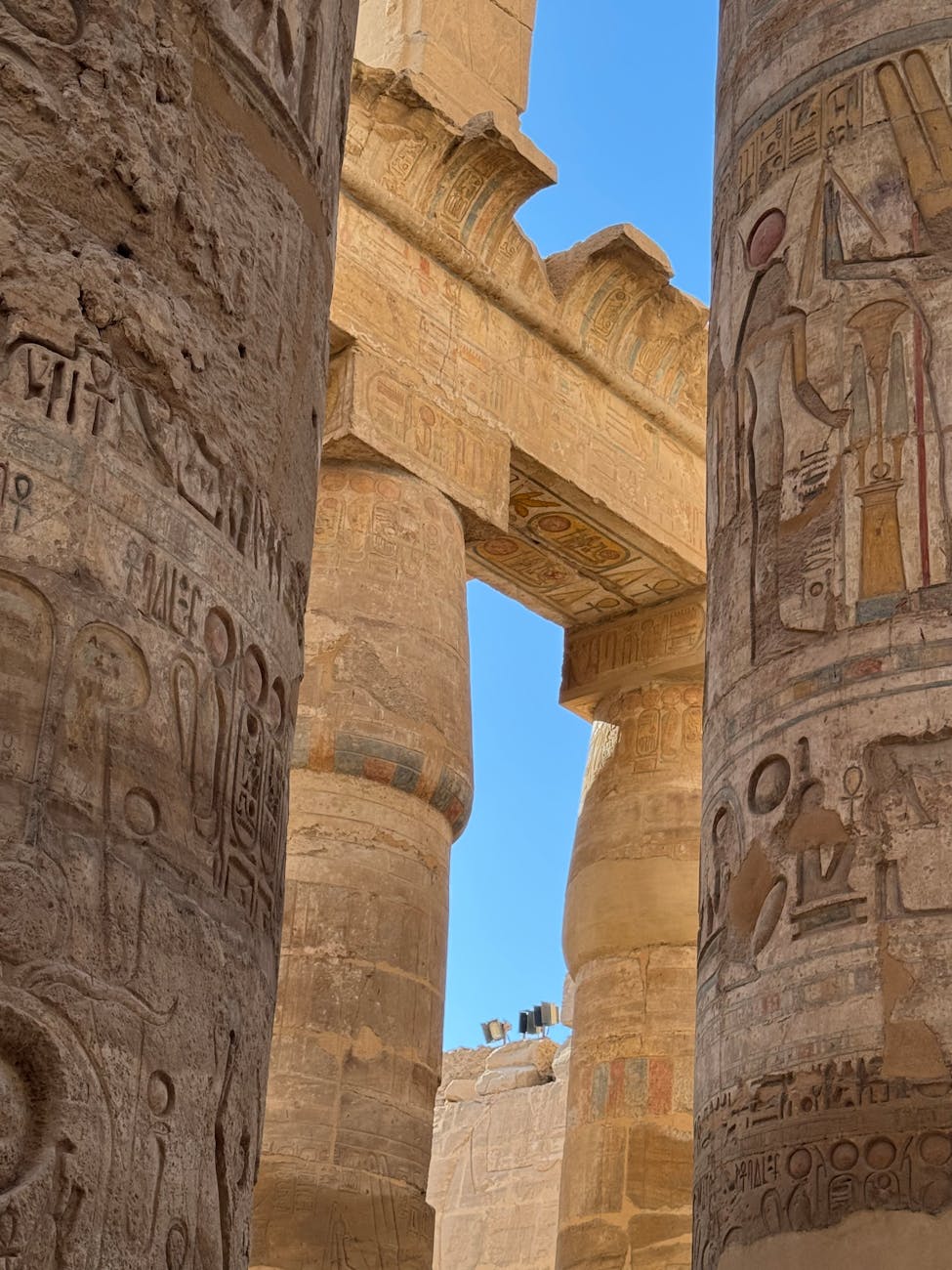
Egyptian deities were often represented in forms that modern viewers find unforgettable. Some were humanlike, some were animal-like, and some combined both.
A useful word here is zoomorphic, meaning represented with animal form or animal features. Egyptian religion is famous for this style of divine imagery. A deity might appear fully animal, fully human, or as a hybrid figure joining human and animal traits.
These forms were not random decoration. They reflected the many ways Egyptians understood divine power. A god’s appearance could express strength, fertility, protection, perception, or cosmic importance. Since gods were tied to forces within the world, it made sense for them to be pictured through forms drawn from that world.
This mixture of forms also helps explain why Egyptian religion still captures attention today. Its divine imagery feels both symbolic and vivid: gods were not abstract ideas only, but beings given memorable, visual identities.
Gods of the dead and the world beyond
Few parts of Egyptian belief are more famous than its focus on death and the afterlife. In this area, deities such as Ra and Osiris played major roles, being associated with the judgment of the dead and their care after death.
The afterlife refers to existence beyond bodily death. In Egyptian religion, this was not a vague idea. It was a realm requiring order, guidance, and divine oversight. The dead were not simply gone; they entered a condition in which divine beings still mattered intensely.
That Ra and Osiris were connected with both judgment and care is especially revealing. Divine power was not only about authority, but also about maintaining order for those who had passed on. Egyptian religion treated death as a transition governed by sacred forces, not an end beyond structure.
This also helps explain why some gods became so important across Egyptian history. A deity connected to the fate of the dead would naturally hold deep significance for kings, priests, and ordinary people alike.
Why so many deities?
The large number of Egyptian deities makes more sense when you see how expansive the category of “deity” could be. A deity might be linked to a natural phenomenon, a physical object, a social aspect of life, a form of perception, or the fate of the dead. Egyptian texts also suggest that beings outside ordinary daily life could fall under divine categories.
In practice, this meant religion could absorb many layers of reality. Local traditions could preserve their own gods. Temples could elevate specific divine figures. Royal systems could emphasize those tied to kingship and cosmic order. And over time, contact with neighboring cultures added still more complexity.
Foreign deities were adopted and venerated as Egyptians interacted and traded with surrounding peoples during the early centuries of the common era. So Egyptian religion was not frozen in place. It adapted, expanded, and absorbed.
From prehistoric roots to a state religion
The earliest written evidence for Egyptian deities dates to the early 3rd millennium BCE. These beliefs likely grew out of even earlier prehistoric traditions. Over time, however, Egyptian religion became more systematized and sophisticated, especially after the formation of the Egyptian state under the pharaohs.
This political development mattered. Pharaohs were treated as sacred kings and held exclusive rights to interact with the gods. That gave the divine order a powerful place within the structure of the state. Religion was not just private belief or temple ritual; it was interwoven with royal authority.
As a result, Egyptian deities were not only worshipped as forces of nature or protectors of the dead. They were also part of a larger sacred system tied to kingship, temple life, and social organization.
A pantheon with many layers
Even within the broad Egyptian pantheon, some deities stood out for specific themes:
- Min was a fertility god.
- Neith was a creator goddess.
- Shu represented air.
- Sia represented perception.
- Meretseger represented parts of the earth.
- Ra and Osiris were associated with judgment and care in the afterlife.
Yet these brief labels only go so far. Major gods often had multiple roles, which means Egyptian religion was layered rather than rigid. A single deity could matter in ritual, mythology, cosmic order, and the destiny of the dead.
That complexity is one reason the Egyptian divine world still feels so vast. It was not simply a collection of gods with job titles. It was a system for understanding nature, society, death, power, and the unseen structure of existence.
Why Egyptian deities still fascinate people
Ancient Egyptian deities continue to grip the imagination because they combine huge scale with vivid detail. There were thousands of named divine powers, yet many were tied to recognizable parts of life: air, earth, perception, fertility, judgment, and care for the dead. They could be human, animal, or hybrid. They belonged to temples, myths, cults, and local traditions. And they were woven into the authority of pharaohs and the hope of life after death.
That combination makes Egypt’s pantheon feel both enormous and intimate. It is a world where the cosmos is full of personalities, powers, and sacred presences, each revealing a different way of seeing reality.
In that sense, the “thousands of powers” of ancient Egypt were more than a count of gods. They were a way of mapping everything that mattered.
Sources
Based on information from Deity.
More like this
Unlock more mind-sized mysteries than an Egyptian pantheon can count—download DeepSwipe and start worshipping your curiosity daily.


