Full article · 7 min read
How Pyroclastic Surges Killed at Vesuvius in 79 AD
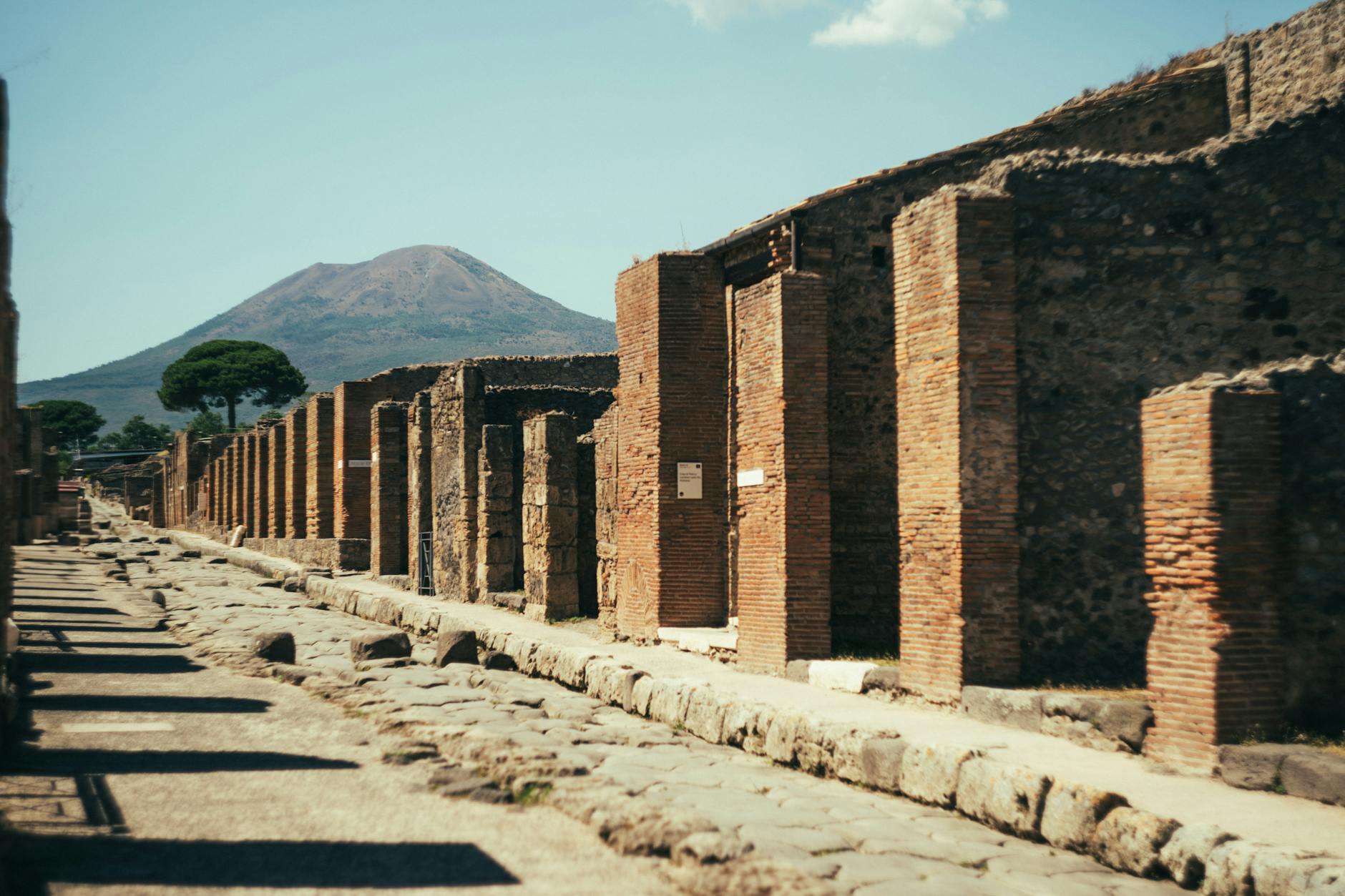
When people think of Mount Vesuvius and the destruction of Pompeii, they often imagine a city slowly buried under falling ash. But the deadliest part of the disaster was not just ash drifting from the sky. It was the arrival of pyroclastic surges: fast-moving, searing clouds of hot gases, ash, and volcanic debris that turned survival into a matter of seconds.
The eruption of Vesuvius in 79 AD was one of history’s most catastrophic volcanic events. It destroyed Roman towns around the Bay of Naples, including Pompeii and Herculaneum, and preserved a haunting record of how people died. Modern excavations and later scientific studies have helped explain why so many victims were found in dramatic, twisted positions and why some parts of Pompeii became death traps almost instantly.
What is a pyroclastic surge?
A pyroclastic surge is a type of volcanic current made of extremely hot gas, ash, and rock fragments moving rapidly outward from a volcano. In the Vesuvius disaster, these surges were associated with the later phases of the eruption, after the volcano had already hurled vast amounts of pumice and ash high into the atmosphere.
Earlier in the eruption, pumice and ash rained down for many hours, especially toward Pompeii. But later, parts of the eruption column collapsed. That collapse generated pyroclastic density currents, including surges, which spread across the landscape and engulfed entire settlements.
These surges were not just hot. They were dense, destructive, and capable of knocking down walls, burning structures, and overwhelming anyone still alive in the cities.
Pompeii’s last moments
Stratigraphic studies concluded that the eruption unfolded in alternating phases, with major surges striking after the long fall of pumice and ash. Pompeii first endured heavy fallout deposits, including a thick layer of white and then grey pumice. During that stage, roofs collapsed and at least some residents still had opportunities to flee.
Then came the lethal turning point.
In the early morning of the second day, two major surges struck Pompeii. These later surges are believed to have destroyed and buried the city. Studies identified surges 4 and 5 as the ones that finished Pompeii, leaving it engulfed beneath deep volcanic deposits.
The effects were devastating. The surges knocked down walls and spread through the urban landscape, filling streets and rooms. One study found that the city itself influenced temperatures in complex ways, with buildings interacting with the flow. Even so, the environment remained lethally hot.
During the fourth pyroclastic surge, temperatures at Pompeii reached about 300 °C. That is hot enough to kill a person in a fraction of a second.
Heat, suffocation, and collapsing walls
The victims of Vesuvius did not all die the same way. Some were overcome during ash fall, often inside buildings. Others were killed by the surges themselves.
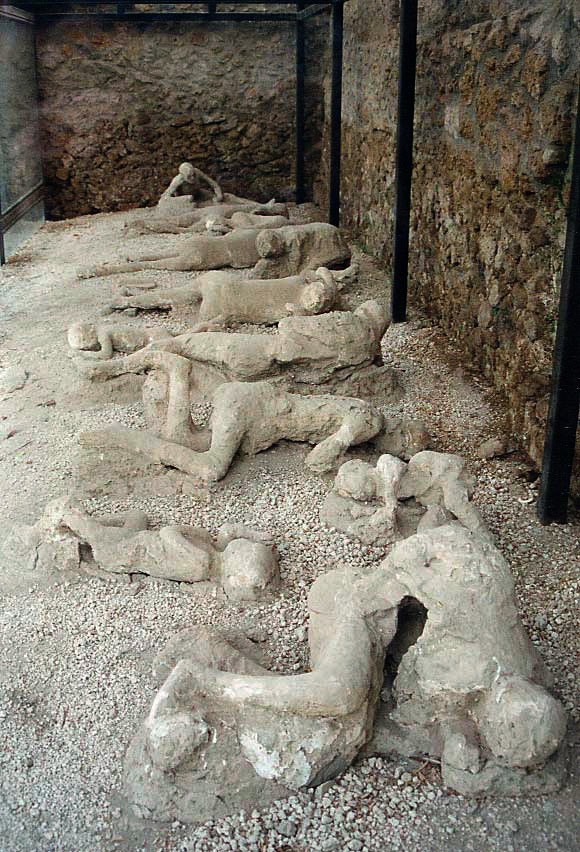
At Pompeii, about 38% of the 1,044 casts recovered by 2003 were found in ash-fall deposits, mostly inside buildings. That is striking because in modern explosive eruptions over the last 400 years, ash falls account for only around 4% of victims. At Pompeii, many people may have tried to shelter indoors while pumice accumulated, only to be trapped when buildings failed or when later surges arrived.
The remaining 62% of bodies found at Pompeii lay in pyroclastic surge deposits. These surges likely killed by a combination of extreme heat and suffocation. The current itself contained hot gases and fine material that could asphyxiate those caught in it, while the temperature could inflict fatal thermal shock almost instantly.
The destruction was not only biological but structural. Walls collapsed, roofs failed, and refuges became deadly. In the first surge to hit Pompeii, temperatures varied because of interactions with the city’s buildings. Some areas under collapsed roofs were cooler, down to around 100 °C, but still far from safe. By the second major surge, many of those irregularities were gone, and the city was as hot as its surroundings.
Why the bodies look frozen in motion
One of the most haunting features of Pompeii is the posture of many victims. Their bodies appear contorted, as if caught in terror or agony. For a long time, these poses encouraged the idea of prolonged suffering.
Later studies offered a different explanation.
The twisted positions are linked to cadaveric spasm, a rare instant stiffening of muscles at the moment of death. In this case, the trigger was heat shock. Rather than showing a long, drawn-out death, these postures point to sudden death under extreme thermal conditions.
Researchers concluded that the heat of the surge was so intense that organs and blood were vaporised. It has even been suggested that at least one victim’s brain was vitrified, meaning transformed into a glass-like state by extreme heat, though that specific claim remains disputed.
In simple terms, many victims were not slowly suffocating under ash for hours at the end. They were struck by an event of overwhelming speed and temperature.
Herculaneum: even closer, even worse
If Pompeii is the most famous of the destroyed cities, Herculaneum reveals just how deadly pyroclastic surges could be at close range.
Because of wind direction, Herculaneum was initially spared the heavy tephra fall that affected Pompeii. Tephra is the general term for volcanic material blasted into the air, including ash and pumice. But that early stroke of luck did not last.
Herculaneum was later buried under about 23 metres of material deposited by pyroclastic surges. Most or all of the known victims there are thought to have died in the surges, not from falling ash.
The remains of about 332 bodies have been found at Herculaneum, including around 300 in arched vaults discovered in 1980 on the seashore. These people were crowded together at densities as high as three per square metre. Evidence from their skeletons and from carbonised wood in buildings indicates exposure to very high temperatures. The victims in the vaults were likely killed by thermal shock during the first surge, and later, hotter surges partly carbonised them.
Herculaneum’s fate shows that distance from the volcano mattered enormously. Closer settlements could be obliterated by heat and surges before ash burial became the main story.
The science of measuring the heat
Scientists have gone beyond written descriptions and excavation records to estimate how hot the volcanic deposits were. One study examined the magnetic properties of fragments such as roof tiles, plaster, and rocks from Pompeii’s pyroclastic deposits.
This method relies on how heated materials can lose and then regain magnetic alignment depending on temperature. By carefully measuring these changes, researchers estimated the equilibrium temperatures of the deposits left by the surges.
Their results helped reconstruct the sequence of the disaster. During the first day, white pumice heated roof tiles to around 120–140 °C. That period may have been the last practical chance for many residents to escape. Later, as the eruption intensified and the eruption column collapsed, the surges arrived.
For the first major surge to hit Pompeii, the estimated emplacement temperatures ranged from 180–220 °C at minimum, with depositional temperatures ranging from 140–300 °C. In some upstream and downstream parts of the flow, temperatures reached 300–360 °C. The second major surge was even hotter, with emplacement temperatures estimated at 220–260 °C.
These figures explain why survival inside the city became impossible.
Eyewitness terror from across the bay
The only surviving eyewitness account comes from Pliny the Younger, who was 17 at the time and watched events from Misenum, about 29 kilometres away across the Bay of Naples. He described an extraordinarily dense cloud rising above the mountain like a pine tree, with a tall trunk and branching top.
As darkness spread, he reported broad flames shining from several places on Vesuvius. Tremors shook the ground, the sea seemed to pull back from the shore, and a black cloud obscured the light. Ash fell heavily enough that he had to shake it off periodically to avoid being buried.
His account captures the terror of the event from a distance, but archaeology shows that for people in Pompeii and Herculaneum, the later surges were the true instruments of mass death.
More than burial
The eruption of 79 AD killed at least 1,500 known victims whose remains have been found at Pompeii and Herculaneum, though the total death toll is unknown. The combined population of the two cities was over 20,000.
What makes the catastrophe so chilling is that it was not simply a story of gradual burial. In many cases, it was a story of violent, high-temperature currents that could tear through streets, collapse buildings, and kill in an instant.
That is why the final poses of Pompeii’s victims still resonate so strongly. They are not only archaeological remains. They are evidence of what pyroclastic surges do: strike fast, burn fiercely, and leave almost no time at all between life and death.
Sources
Based on information from Eruption of Mount Vesuvius in 79 AD.
Feel the heat of history without the ashfall — download DeepSwipe and let explosive facts surge into your feed daily.