Full article · 7 min read
New Guinea: Oceania’s Hidden Rainforest
A giant rainforest in the world’s smallest continent
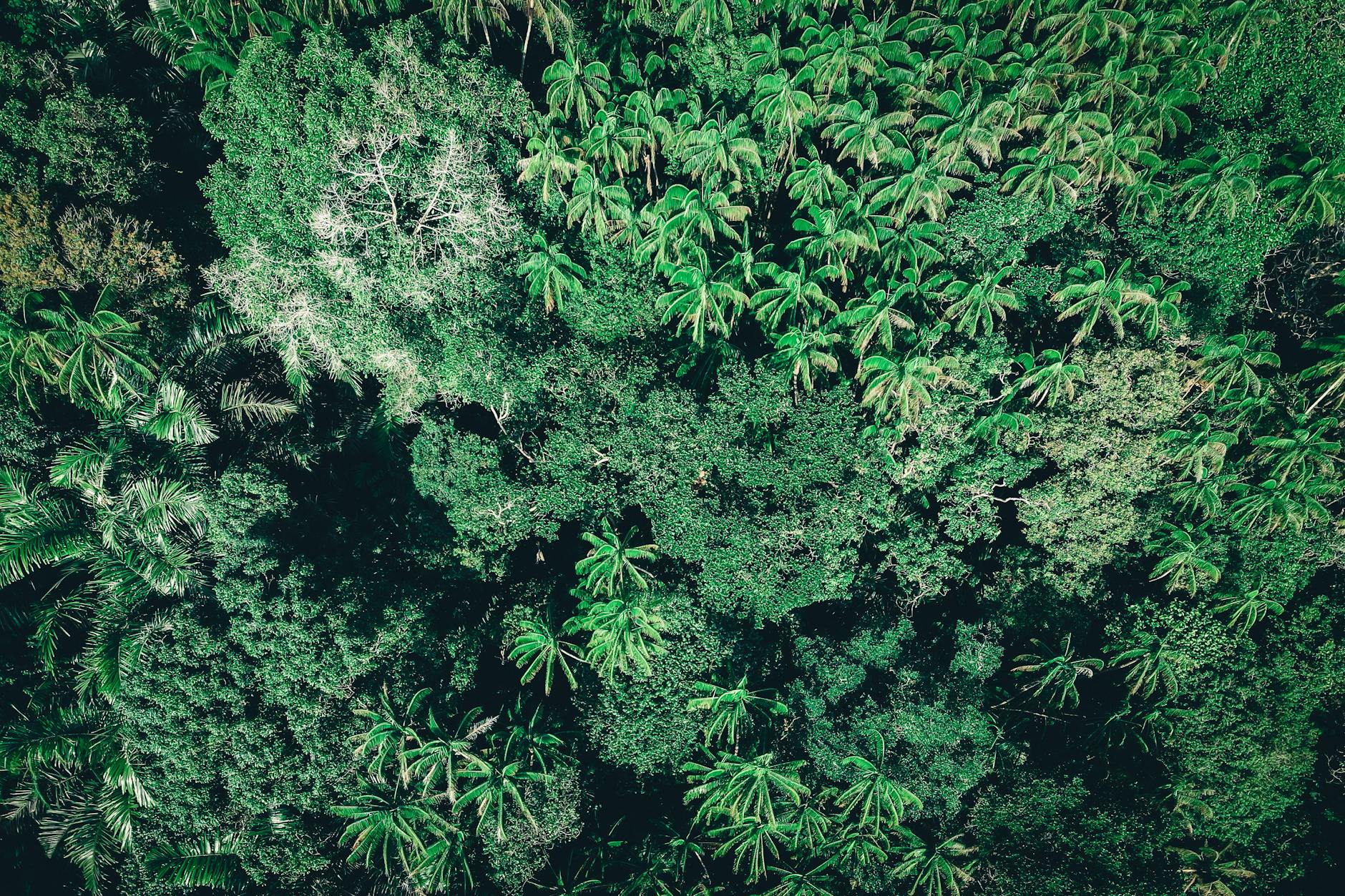
Oceania is the smallest continent in land area, yet it contains one of the planet’s most remarkable natural strongholds: the vast tropical rainforest of New Guinea. This island is home to Earth’s third-largest remaining area of tropical rainforest, a huge green world that helps make Oceania far more ecologically important than its size might suggest.
New Guinea sits within Melanesia, one of Oceania’s major subregions. It is also the world’s second largest island after Greenland, and by far the largest of the Pacific islands. That combination of scale, tropical climate, and rugged geography has allowed enormous stretches of forest to endure.
For anyone imagining Oceania only as beaches and small islands, New Guinea changes the picture completely. Here, the landscape is dominated by rainforest, mountains, and remote interior zones that still feel beyond easy human reach.
Why this rainforest feels so hidden
Part of what makes New Guinea’s rainforest seem mysterious is not just its size, but how difficult it is to access. Large areas of New Guinea are unexplored by scientists and anthropologists because of extensive deforestation and mountainous terrain. That may sound contradictory at first, but it reflects how unevenly known the island is: some places are affected by human pressure, while others remain extremely difficult to study.
The island’s physical geography helps explain this. Oceania includes many high islands, meaning islands of volcanic origin with elevated, rugged terrain. New Guinea is part of a region where mountains, isolated valleys, and thick forest can make travel and research difficult. In places like this, even short distances on a map can become major obstacles on the ground.
When people say an area is “hard to study,” they do not mean no one has ever been there. They usually mean that scientific work is limited by access, transport, weather, and the sheer complexity of the terrain. In New Guinea, those barriers are significant enough that major areas are still not well documented.
A rainforest tied to deep human history
New Guinea is not only biologically important. It is also central to the deep human story of Oceania. The first settlers of Australia, New Guinea, and the large islands just to the east arrived more than 60,000 years ago. In other words, people have been connected to this region for an astonishing span of time.
In discussions of Oceania, scholars sometimes use the term Near Oceania. This refers to New Guinea, the Bismarck Archipelago, and the Solomon Islands except the Santa Cruz Islands. The label helps distinguish this long-settled western part of Oceania from more distant island regions settled later.
New Guinea’s early inhabitants are linked in the article to Papuan-speaking peoples, and later to contact with Austronesian peoples who migrated into the area somewhat more than 3,000 years ago. Over time, this contributed to complex changes in genetics, languages, and culture. That makes the island not just a refuge of forest, but a meeting ground of ancient human histories.
Peoples living beyond regular outside contact
One of the most striking facts about New Guinea is that some communities there still have little connection with the outside world. In the Indonesian provinces of Papua and West Papua on the island of New Guinea, there are an estimated 44 uncontacted tribal groups.
“Uncontacted” does not mean these peoples are unknown in every sense. It means they avoid, or have extremely limited contact with, outsiders. In many cases, local authorities may know that such groups exist without having detailed information about them.
The article notes that many known indigenous tribes in Papua New Guinea have very little contact with local authorities aside from the authorities knowing who they are. It also says many remain preliterate, and that, at national or international level, the names of tribes and information about them are extremely hard to obtain.
That has major implications. It means New Guinea is not only a place of hidden landscapes, but also of living cultures whose knowledge systems, languages, and ways of life may be only faintly understood by the wider world.
Why so much remains unknown
There is a simple reason New Guinea keeps so many secrets: terrain and isolation. Archaeological excavation in island environments can already be difficult, and New Guinea adds mountain barriers, remote interior regions, and dense forest. The article specifically highlights mountainous terrain as a reason large areas remain unexplored.
This isolation is part of a broader Oceanian pattern. Before Europeans arrived, the sea often shielded Australia and the south central Pacific islands from cultural influences spreading across large continental landmasses. In New Guinea’s case, the shielding effect was not only the ocean, but also the island’s own interior geography.
That isolation helped preserve distinct peoples and environments. It is one reason Oceania developed such a wide range of cultures, languages, and ecosystems.
New Guinea in the wider ecology of Oceania
Oceania is one of the planet’s major ecological regions, and New Guinea is one of its most important anchors. The article describes Oceania as one of eight terrestrial biogeographic realms. A biogeographic realm is a very large area defined by broad patterns in plants and animals.
New Guinea also belongs to a region where biological diversity is unusually rich. Across Australia, New Zealand, New Guinea, Wallacea, and the Pacific islands, 42% of the world’s parrot species are found, including half of all Critically Endangered parrots, many of them endemic. “Endemic” means native to one place and found nowhere else.
The tropical rainforest of New Guinea therefore matters not only because it is huge, but because it likely shelters a large concentration of unique life. Even without listing every species, the wider ecological context makes clear that this forest is part of one of Earth’s most distinctive biological zones.
The island’s place in Melanesia
New Guinea is the defining giant of Melanesia. Melanesia includes New Guinea, the Bismarck Archipelago, the Solomon Islands, the Santa Cruz Islands, Vanuatu, Fiji, and New Caledonia. Among these, New Guinea stands out physically and historically.
The original inhabitants of the islands now called Melanesia were likely the ancestors of present-day Papuan-speaking people. They appear to have occupied islands as far east as the main islands of the Solomon Islands archipelago. Later, Austronesian-speaking peoples came into contact with these earlier populations, especially along the north coast of New Guinea and on islands north and east of it.
This layered history helps explain why New Guinea is often seen as a place of extraordinary cultural complexity. Its forests are not empty wilderness. They are part of a human landscape shaped over very long spans of time.
Rainforest, culture, and unanswered questions
When people think of a rainforest, they often think first of biodiversity. New Guinea’s rainforest certainly invites that kind of awe. But it is just as compelling as a storehouse of human knowledge.
If many communities have little contact with authorities, if some groups remain uncontacted, and if large areas are still difficult for scientists and anthropologists to explore, then New Guinea is more than a remote island. It is a living library.
That phrase fits because forests like this hold many kinds of knowledge at once: ecological knowledge, linguistic diversity, cultural practices, and evidence of ancient migration and settlement. In a region where some scholars distinguish Near Oceania from Remote Oceania, New Guinea stands as one of the great old centers of human life in the Pacific world.
A hidden world in plain sight
New Guinea’s rainforest is hidden, but not because it is small. It is hidden because it is vast, rugged, and difficult to fully know. It survives inside Oceania, a continent often underestimated because of its size and because so much of it is linked by ocean rather than by one continuous landmass.
Yet within that smallest continent stands one of the world’s biggest remaining tropical forests, on one of the world’s largest islands, in a place where dozens of tribal groups still live beyond regular outside contact and where large areas remain hard for researchers to reach.
That combination is rare. New Guinea is not just a rainforest on a map. It is one of the last great regions where geography still limits knowledge, where culture and ecology remain deeply entangled, and where the canopy may still conceal stories the wider world has barely begun to understand.
Sources
Based on information from Oceania.
More like this
Go off the beaten path of knowledge — download DeepSwipe and explore hidden worlds like New Guinea, one swipe at a time.


