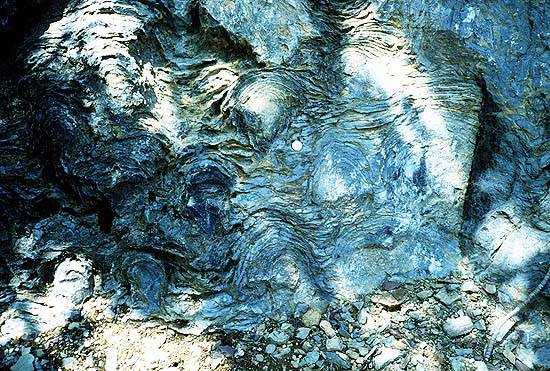
![The earliest known life forms may be putative fossilized microorganisms, found in white smoker hydrothermal vent precipitates. They may have lived as early as 4.28 Gya (billion years ago), relatively soon after the formation of the oceans 4.41 Gya, not long after the formation of the Earth 4.54 Gya.[78]](https://cdn.deepswipe.app/images/0.2.0/75e77e3495d4ac9ee65146c453f17d93dced1cc45f61960d7fb2aa0f8d9ac371.jpg)
Life started fast
Earth formed about 4.54 billion years ago, and evidence of life appears by 3.8 billion years ago. On the timescale of Earth's history, that means life seems to have arrived surprisingly quickly.Abiogenesis: How Life May Have Begun
But it was not one magic moment
Abiogenesis is the idea that life emerged from non-living matter through rising complexity. Scientists picture many steps: organic molecules, self-replication, self-assembly, autocatalysis, and eventually membranes.Abiogenesis: How Life May Have Begun
