Full article · 8 min read
Performance and Improvisation in Music
Music may be written, rehearsed, and recorded, but it is never only a fixed object on a page. A musical work comes alive through performance, and in many styles it changes shape every time it is played. Even the most carefully notated piece still leaves room for human choice. Tempo can shift, phrases can breathe differently, and performers can shape a melody in ways that make one rendition feel completely unlike another.
That is why performance is more than playback. It is interpretation.
What performance really means
Performance is the physical expression of music. It happens when a song is sung, a piano piece is played, a symphony is brought to life, or a drum beat drives a room forward. In classical music, a composer may write a work in notation and refine its structure and instrumentation, but once performers take it on, the piece can evolve through their choices.
A performer may alter phrasing, which is the way musical lines are shaped and grouped, almost like punctuation in speech. They may also adjust tempo, meaning the speed of the music. These decisions affect how listeners experience tension, release, excitement, calm, and emotion.
This process is called interpretation. Even when notation is relatively precise, it does not specify every detail. Different performers can take the same work and make it feel dramatically different simply through choices in timing, emphasis, style, and articulation.
Why written music is never the whole story
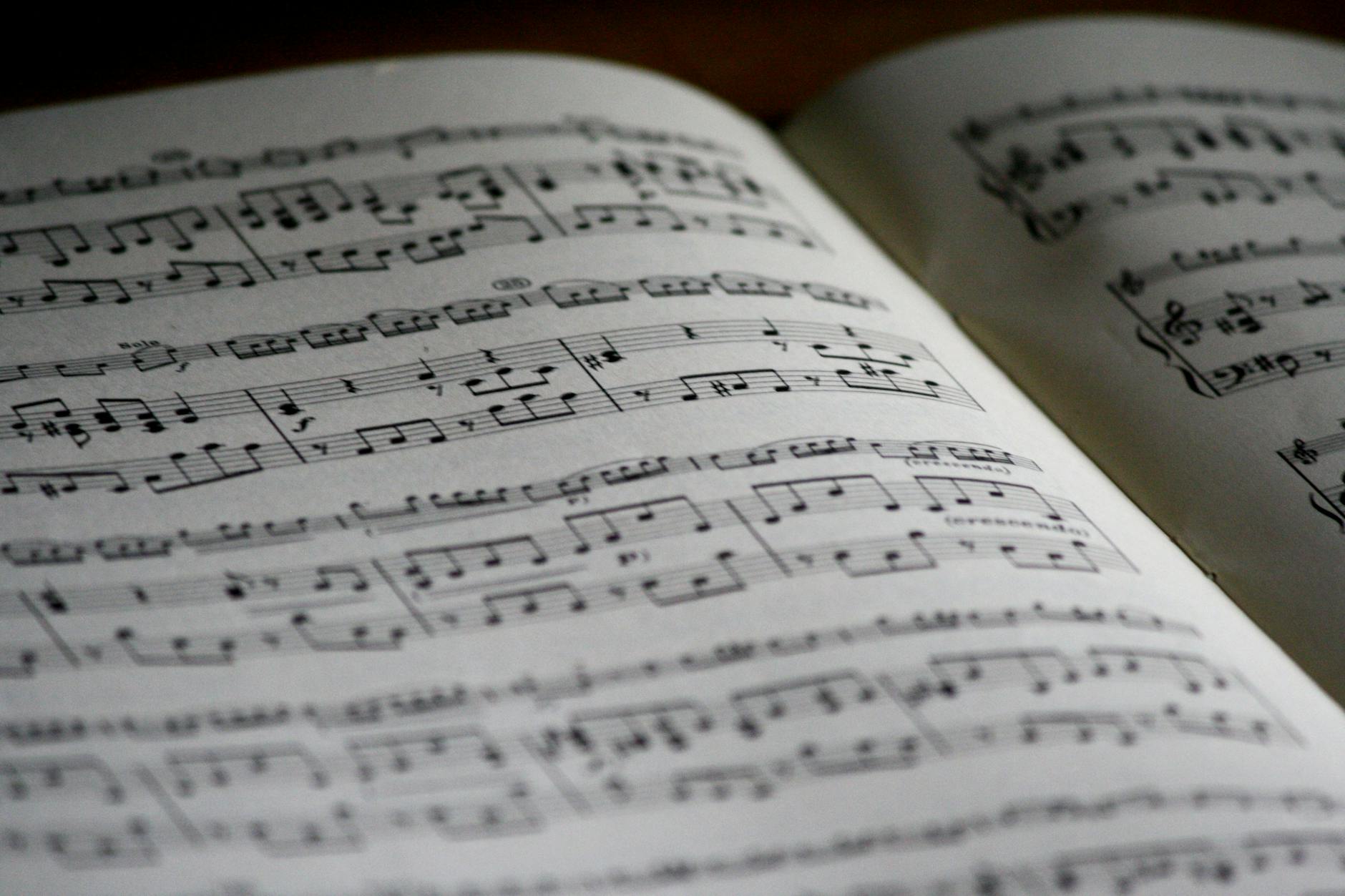
Music notation is a way of writing down notes and rhythms, often with added instructions about genre or tempo. But notation has limits. It can show pitch and rhythm clearly, yet it cannot fully capture every nuance of musical expression.
A score may indicate that a passage should be slow, fast, loud, soft, smooth, or accented. Still, performers must decide exactly how slow, how dramatic, or how connected the notes should sound. In that sense, a performer is not merely reproducing a set of instructions. They are actively shaping the experience.
This is true across many kinds of music. In Western art music, performers are expected to understand the performance practice associated with a style or period. Performance practice refers to the standard body of choices and techniques used in a particular time and place. Interpretation, by contrast, refers to the individual decisions of a particular performer.
Classical music and the art of interpretation
It is easy to imagine classical music as completely fixed because it often relies on notation. But even there, performance remains full of decisions.
A conductor leading an orchestra may shape a phrase one way, while another conductor emphasizes a different contour or dramatic arc. A singer may stretch a cadence slightly. A pianist may choose a more flowing or more restrained tempo. Over time, these choices can influence how a piece is understood.
Historically, improvisation also had an important place in Western art music. During the Baroque era, performers improvised ornaments, which are decorative musical additions, and keyboard players in basso continuo improvised chord voicings from figured bass notation. In the Classical era, soloists and singers improvised virtuosic cadenzas during concerts. A cadenza is a showpiece-like passage, often near the end of a section, where the solo performer displays skill and expressive freedom.
In the 20th and early 21st century, improvisation became less central in institutionalized Western art music performance as orchestras, opera houses, and ballets increasingly relied on detailed scores and parts. Even so, some composers in these centuries brought improvisation back into their work.
Popular and traditional music often leave more room
In popular and traditional music, performers frequently have greater freedom to reshape a song. A band can play a cover version and make major changes without losing the identity of the piece. They might add a guitar solo, insert a new introduction, or alter the form.
That freedom matters because these traditions often treat performance as a living act rather than a fixed reproduction. Songs may be passed along orally or aurally, meaning they are learned by memory or by ear rather than strictly from written notation. In these settings, variation is often expected.
Some traditions preserve songs closely, while others actively encourage performers to modify them. This helps explain why the same song can sound radically different from one artist, region, or generation to the next.
What improvisation actually is
Improvisation is the creation of spontaneous music. It may happen with or without preparation, but it usually takes place within some kind of framework. That framework might be a chord progression, a riff, or a harmonic pattern already understood by the performers.
In simpler terms, improvisation is not random noise. Musicians often build their spontaneous ideas from scales, chord tones, passing tones, and ornaments that fit or play against the underlying harmony.
A chord progression is a sequence of chords that forms the harmonic foundation of a passage. A riff is a short, repeated musical idea. Harmonic means related to chords and the vertical combination of notes. These structures give improvisers something to respond to in real time.
Genres where improvisation is central
Improvisation is a major part of blues, jazz, jazz fusion, and Indian classical music. In these traditions, creating music in the moment is not just an extra flourish. It is often the point.
In blues and small jazz groups, performers may improvise solos, melody lines, and accompaniment parts. A solo is a featured passage for one musician, while accompaniment provides the supporting harmonic and rhythmic background. This can make each performance unique, even when the same tune or progression is used night after night.
Jazz is especially associated with improvisation. Its style includes blue notes, polyrhythms, syncopation, and the swung note. Blue notes are tones that give jazz and blues part of their characteristic color. Polyrhythms involve multiple rhythmic patterns happening at once. Syncopation means placing emphasis where a listener may not expect it. Swing gives rhythm a distinct elastic feel rather than a strictly even pulse.
Indian classical music also treats improvisation as a core component and an essential criterion of performance. This means a musician is not simply judged by how accurately they repeat something fixed, but by how creatively and skillfully they develop music in the moment.
Rehearsed versus improvised music
Not every performance is equally spontaneous. Some are carefully planned and rehearsed, which is common in classical music, jazz big bands, and many popular styles. Rehearsal is the structured repetition of a song or piece until it can be performed correctly and, in ensemble settings, with rhythmic and tuning unity.
Other performances are built around improvisation over a chord progression, which is common in small jazz and blues groups. In these settings, musicians rely on listening, shared understanding, and rapid response.
This creates one of the most exciting things about live music: the balance between preparation and surprise. Some parts may be fixed, while others are discovered in the moment.
Soloists, ensembles, and musical freedom
Performance traditions also differ in how they distribute freedom. Some cultures have strong solo performance traditions, where a single singer or instrumentalist carries the expressive burden. Others emphasize group performance, from choirs and orchestras to smaller chamber ensembles.
Chamber music, which is written for a small ensemble with one or a few players on each part, is often considered more intimate than large symphonic music. That intimacy can make interpretive decisions feel especially exposed and personal.
In group improvisation, freedom becomes collaborative. One player introduces an idea, another answers, and the music unfolds through interaction. This is one reason live improvised music can feel so immediate: listeners are hearing decisions happen in real time.
Technology changed performance, but not the need for interpretation
Recording technology transformed how people encounter music. In the 19th century, sheet music helped new compositions spread. In the 20th century, radio, gramophone records, tape, and later digital playback made recorded sound the main way many listeners discovered music.
Multitrack recording allowed artists and producers to overdub layers of instruments and vocals, creating sounds that would not be possible in a single live take. Digital audio workstations and music software expanded this even further.
Yet even with these tools, interpretation remains central. A recorded performance still reflects musical choices about timing, tone, phrasing, layering, and expression. Some performances even blend live and prerecorded sounds, while practices like karaoke and DJ performance show how performance can include interaction with existing recordings rather than only fresh notation.
Why performance keeps music alive
A piece of music may begin with composition, but it reaches people through performance. That is where notation becomes sound, and where sound becomes expression. Whether a musician is interpreting a written score, reshaping a cover song, or inventing a solo on the spot, they are doing more than executing instructions.
They are making decisions that give music character.
This is why two performances of the same material can feel completely different. One may sound intimate, another bold. One may stay close to tradition, another may stretch it. In improvisation-heavy traditions, the music may never exist in exactly the same form twice.
Music is often described through elements like melody, harmony, rhythm, texture, timbre, and expression. Performance is where those elements are actively handled by human beings. Improvisation takes that a step further by turning choice itself into part of the art.
When that happens, music stops being merely something preserved. It becomes something lived.
Sources
Based on information from Music.
More like this
Don’t just press play on knowledge — improvise your learning routine with DeepSwipe. Download the app and riff through something new every day.